Rainbow Toonz: A Retro Serif Color Font for Handmade Brands
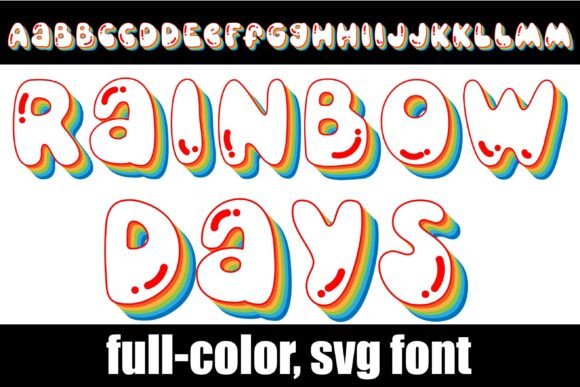
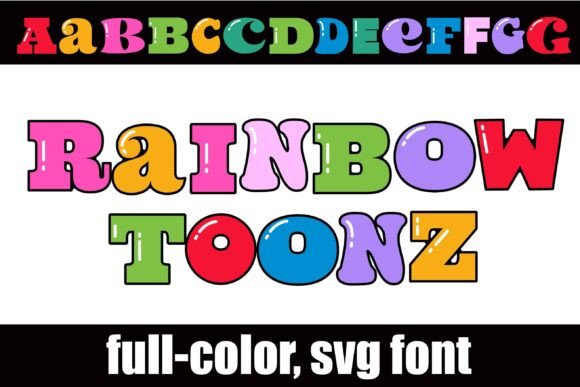
If you’ve ever spent hours layering rainbow gradients onto letters in design software—only to watch them shift or pixelate on print or cut—you’ll understand why Rainbow Toonz feels like a quiet miracle. This isn’t just another colorful font. It’s a full-color, retro-inspired serif typeface built as a true color font, meaning every letter arrives pre-painted in vibrant, harmonious rainbow hues—and each one holds its integrity at any size, from a ¼-inch sticker to a 24-inch wall sign.
What makes Rainbow Toonz especially valuable for crafters and small shop owners is how thoughtfully it balances personality with practicality. The serif structure gives it subtle authority and warmth—think vintage postcards, mid-century diner menus, or hand-stamped apothecary labels—while the rainbow palette adds instant joy and approachability. It’s cheerful without being childish, nostalgic without feeling dated, and bold without sacrificing readability.
Where Rainbow Toonz Shines in Real Product Work
I use Rainbow Toonz most often where first impressions matter: product labels, greeting cards, wedding welcome boards, and boutique tags. Its retro serif rhythm makes names and short phrases pop with character—perfect for candle jars (“Lavender Skies”), handmade soap bars (“Citrus Grove”), or baby shower invites (“Tiny Rainbows”). Because each glyph is vector-based and color-embedded, there’s no risk of misaligned layers or missing swatches when exporting for Cricut Design Space or Silhouette Studio.
For printable creators, Rainbow Toonz works beautifully on planner pages, quote art, and classroom décor—especially when paired with neutral backgrounds or soft linen textures. I’ve used it for seasonal digital downloads like “Spring Bloom” wall art (paired with a light gray sans serif for body text) and “Cozy Cocoa” mug mockups, where the font’s warmth translates directly into emotional appeal. Customers don’t just read the words—they feel the vibe.
Readability & Production Tips You’ll Actually Use
Rainbow Toonz is designed as a display font, not a body text workhorse. That means it excels at headlines, titles, and short decorative phrases—but avoid using it for paragraphs or fine-print legal text. For physical products, keep it above 14 pt when printed on labels or tags, and never go smaller than ⅜ inch tall for die-cut stickers. On vinyl or heat-transfer projects, test a single letter first: the color separation holds up cleanly on most cutting machines, especially when using the alt case—a bonus set of alternate rainbow variants accessible via OpenType features or Silhouette’s glyph panel.
Here’s what’s in the file package: multiple OpenType (.otf) and TrueType (.ttf) formats, full Unicode support for English and common Western European languages, and built-in stylistic alternates. No extra plugins or font managers needed—just install and go. And yes, it includes basic punctuation, numerals, and standard ligatures, so “fi” and “fl” connect smoothly, preserving that authentic retro flow.
Smart Pairings That Elevate Your Brand Consistency
A great display font like Rainbow Toonz needs thoughtful companions—not competition. I pair it with clean, airy sans serifs (like Montserrat or Poppins) for contrast and clarity in packaging or digital templates. For wedding stationery, I’ll layer it over a delicate script font (think “Elegant Script” or “Lavanderia”) for names, then drop in a crisp serif like Lora for addresses and details. The key is balance: let Rainbow Toonz carry the energy, and let supporting fonts handle the information.
When designing SVG bundles for Etsy, I group Rainbow Toonz elements separately—so buyers can easily recolor non-rainbow parts while keeping the font’s magic intact. That flexibility increases perceived value and reduces support requests about missing colors or broken layers.
Commercial Use? Yes—But Know the Boundaries
Rainbow Toonz is licensed for commercial use, which means you can confidently use it in client work, physical product packaging, printed invitations, SVG files for sale, and digital downloads—including Canva templates and Procreate brushes. You may embed it in PDFs for customer use, but you cannot resell the font file itself or include it in a font bundle. Always verify your license covers your specific use case—especially if you’re selling editable design files where end users might extract and reuse the font.
That said, because Rainbow Toonz is a color font, it won’t render in all platforms (looking at you, older versions of Microsoft Word or basic email clients). So for web or social graphics, treat it as a final-export asset—not a live text layer. Save as PNG or SVG with outlined text when sharing mockups, and always preview on actual devices before sending to print or production.
Why This Font Fits Your Shop’s Voice—Without Trying Too Hard
Handmade brands thrive on authenticity, and Rainbow Toonz delivers that without cliché. It doesn’t shout “vintage!” or “rainbow!”—it simply feels human, hand-touched, and intentional. When customers see it on your lavender-scented sachet tag or your “Welcome to Our Tiny Bookshop” chalkboard sign, they sense care—not just decoration. That subtle trust-building is why I reach for Rainbow Toonz again and again: it supports my brand voice instead of overriding it.
Whether you’re designing holiday mugs for your Etsy shop, printing farmhouse-style market signs for your local co-op, or building a cohesive line of printable birthday kits, Rainbow Toonz offers reliable charm and real-world function. It’s the kind of premium font that pays for itself—not in licensing cost, but in time saved, fewer revisions, and repeat customers who remember how your products *feel*.